What custom cabinets actually change in a San Clemente house
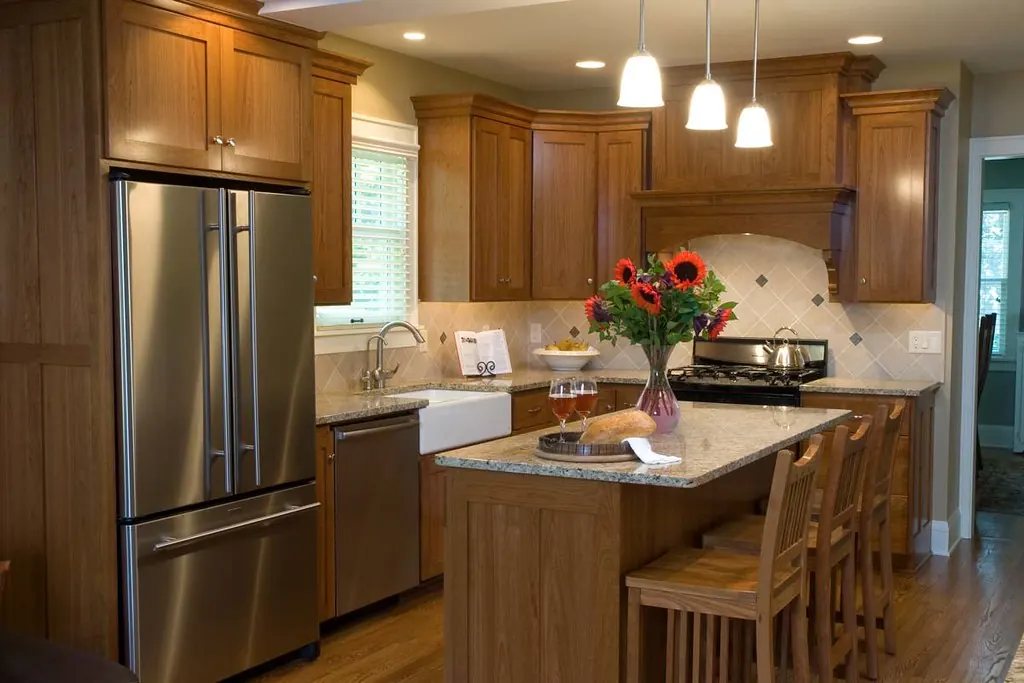
Custom cabinets change one thing, and everything else follows from it: the carcass dimensions are set by your wall instead of by a catalogue. That is not a marketing distinction. Stock cabinets come in fixed widths, usually three inch increments, and when a run of them reaches the end of a wall the remainder is closed with a filler strip. In a house with square walls and a convenient length that filler is an inch and nobody notices. In a house where it is five inches, you have paid for a kitchen and received a compromise.
San Clemente produces more than its share of that second outcome, because the city’s housing was built across a century to no consistent standard. Ole Hanson bought the land in 1925 and laid out a 2,000 acre planned community, one of the first in the country, and the city incorporated on 27 February 1928. The oldest houses, in Southwest San Clemente and North Beach, predate the standardisation of kitchen cabinetry entirely: their casework was built in place by a carpenter to whatever the room was. The City now regulates seven Specific Plan areas, Forster Ranch, Marblehead Coastal, Marblehead Inland, Pier Bowl, Rancho San Clemente, Talega and the West Pico Corridor, and each was built in a different decade to a different idea of ceiling height, appliance size and pantry provision.
So the practical test for whether custom is worth it here is simple. Stand in your kitchen and measure the widest filler strip you can find. If it is under two inches, stock or semi-custom did an acceptable job and refacing may well be your answer. If it is four or five, or if there are two of them, or if there is a dead corner nobody can reach, the room was never going to be solved by catalogue sizes and it will not be solved by a new set of them.
What we build
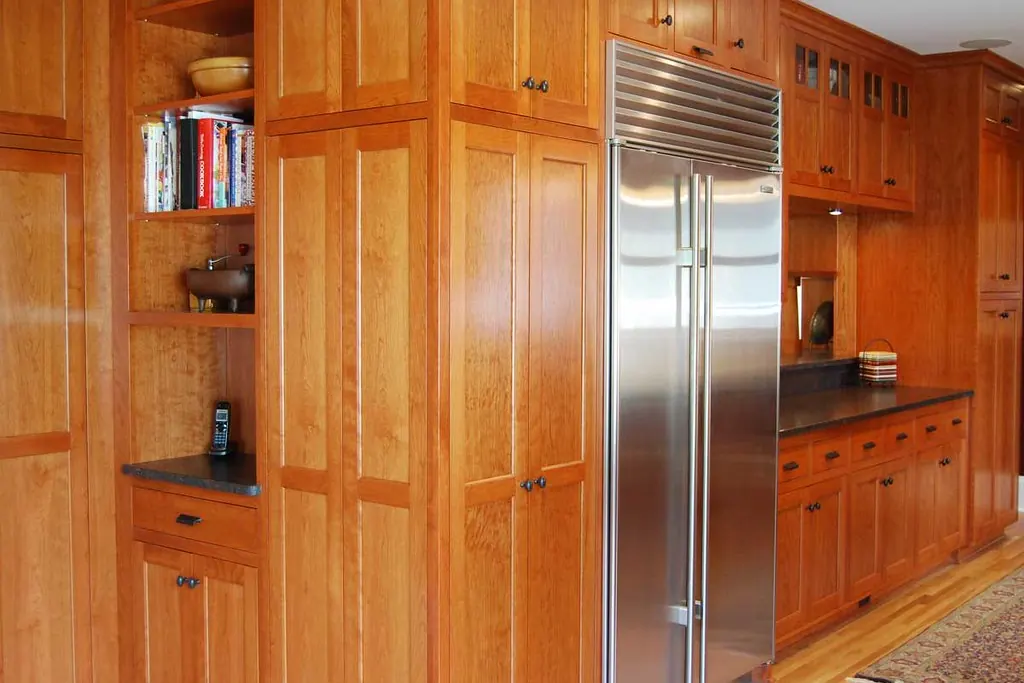
Ten categories of new casework, all drawn from the same measured survey and built in the same shop, which is what makes it possible to match a bar run to a kitchen or a set of built-ins to both. Each has its own page with its own costs and its own failure modes.
Kitchens
The core of the work. A full kitchen is base cabinets, wall cabinets, tall units, the sink base, appliance surrounds and every filler and scribe between them. The design decisions that matter most are the ones nobody asks about in a showroom: how many of the base cabinets are drawers rather than doors, where the trash pull-out sits relative to the sink, and whether the uppers reach the ceiling or stop and create a dust shelf.
Islands and peninsulas
An island is a walkway problem before it is a cabinet problem. The island you want is frequently three inches wider than the island the room can take, and the honest thing to do about that is to find out at the survey rather than at the install. Islands also carry the services question: a sink or a cooktop in an island is new plumbing or new gas, and that is where a permit enters the job.
Bathroom vanities
A vanity has to work around the waste and supply positions, the door swing and the tile that is already on the floor. Fannie Mae’s useful life tables put a bathroom vanity at 10 years for multifamily against 20 for kitchen cabinets, which tells you something true: vanities live a harder life than people expect, largely because of standing water at the top of the splash and around the tap.
Built-ins and media walls
Built-ins are the category where scribing matters most, because a bookcase that meets a wall and a ceiling on three sides shows every degree the room is out of true. They are also where the published life expectancy numbers get uncomfortable: the NAHB study lists entertainment centres and home office furniture at 10 years, the shortest figure in the whole cabinetry table, because the equipment they were built around changes faster than the joinery fails.
Closets and pantries
Closets are measured off the clothes, not off the room. Hang lengths, shoe depths and folded stack heights decide the layout, and the single most common mistake is double-hanging a rail at a height that works for shirts and then discovering that half the wardrobe is dresses. Pantries follow the same logic with cans and small appliances instead.
Garage cabinets
Garage storage is the one place where the published life expectancy is genuinely long: NAHB lists garage and laundry cabinets at 100 plus years, InterNACHI at 70 plus. What kills them early near the coast is not the wood, it is plated steel hardware and a cabinet set directly on a slab that sweats.
Laundry and mudroom
Laundry cabinetry is a folding counter, storage above the machines at a height somebody can actually reach, and a hanging rail. Mudrooms are lockers, a bench and a boot tray. In a beach town both of these carry more sand than anybody plans for, which is an argument for a wipeable finish and against an open cubby at floor level.
Home offices
A built-in desk differs from a bought one in exactly one respect that matters: it can hide the cable run. Everything else is shelving and file drawers, and file drawers are the part people under-specify, because a full-extension slide rated for a loaded letter file is a different component from the one under a cutlery drawer.
Wine and bar cabinets
Bottle storage is a temperature and light question wrapped in a joinery question. A bar run in a family room is straightforward. Long-term bottle storage in an unconditioned space is not, and the honest answer is usually that a cabinet is the wrong tool for it.
Doors, fronts and hardware on their own
Sometimes the boxes are fine and only the doors and fronts need to change, which is refacing by another name, or only the hardware does. Both are real jobs and both are on the services hub.
What custom cabinets cost in San Clemente, CA
Custom cabinetry in this market runs $500 to $1,200 per linear foot on published California figures, and a Los Angeles cabinet maker’s own 2026 guide puts the luxury custom band at $500 to $1,500 per linear foot while describing Los Angeles as roughly 25 percent above a national $400 to $1,200. Those are the numbers to plan against. San Clemente sits in the same labour market and the same air district as Los Angeles, and no published source breaks out a San Clemente-only rate, so no San Clemente-only rate is claimed on this page.
| Tier or market | Installed per linear foot | Source geography |
|---|---|---|
| Stock | $75 to $400+ | National, Thumbtack, updated July 2026 |
| Semi-custom | $150 to $900+ | National, Thumbtack, updated July 2026 |
| Custom | $500 to $1,400+ | National, Thumbtack, updated July 2026 |
| Custom | $500 to $1,200 | California, one cabinet maker's published guide |
| Budget | $75 to $150 | Los Angeles, one cabinet maker's 2026 guide |
| Semi-custom | $150 to $650 | Los Angeles, one cabinet maker's 2026 guide |
| Premium | $300 to $800 | Los Angeles, one cabinet maker's 2026 guide |
| Luxury custom | $500 to $1,500+ | Los Angeles, one cabinet maker's 2026 guide |
The Los Angeles guide attaches stated lifespans to its tiers: 5 to 10 years for budget, 15 to 25 for semi-custom, 20 to 30+ for premium and 30 to 50+ for luxury custom. Those are that company's figures, not a survey.
Run the arithmetic on your own kitchen and the bands become useful. That Los Angeles guide publishes project totals by run length: 15 linear feet at $7,500 to $22,500, 25 feet at $12,500 to $37,500, 35 feet at $17,500 to $52,500, and 50 feet or more “exceeding $75,000”. A typical mid-century San Clemente tract kitchen is around 20 to 24 feet once the base and wall runs are counted together, which puts it near the bottom of that second band.
The add-ons are where quotes diverge after the per-foot number is agreed. Published national figures put crown moulding at about $70 per eight foot section, finished cabinet ends at $100 to $200 each, removal of the old cabinets at about $300, and installation at roughly $100 per cabinet box or $50 to $70 per linear foot. A kitchen with eight exposed cabinet ends has $800 to $1,600 of finished ends in it before anybody has discussed the door style. The San Clemente cost guide works through all of it, and the linear foot guide explains why two honest shops can measure the same room and disagree by a third.
How we build a custom kitchen, step by step
Seven stages, and the useful thing about listing them is that it shows you where your decisions actually bind. Everything is negotiable at stage two and nothing is free after stage four.
What is actually inside the box
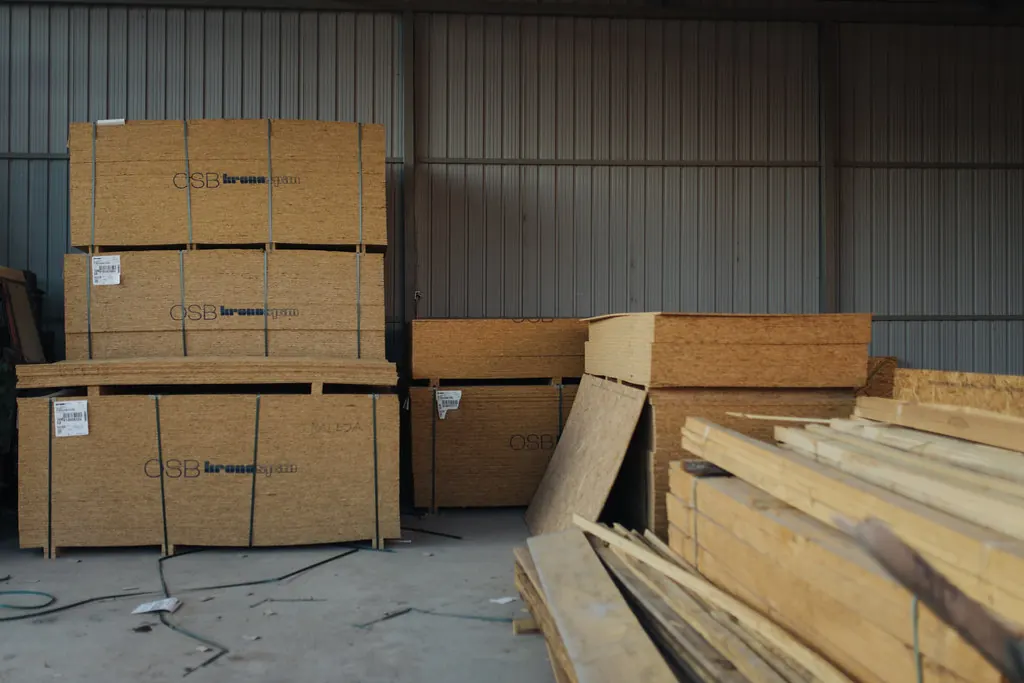
Box material decides how long the kitchen lasts, and it is the specification most likely to be missing from a quote. There are three realistic choices and the right answer is usually a mix of them rather than one throughout.
| Material | Screw holding | Water tolerance | Where it belongs |
|---|---|---|---|
| Plywood | Best of the three | Recovers from a wetting | Sink base, dishwasher run, anything near plumbing |
| MDF | Moderate | Swells and does not recover | Painted doors and fronts, dry cabinets |
| Particleboard | Weakest | Swells and does not recover | Dry uppers, short-horizon budgets, rentals |
All three are composite wood products except solid plywood cores of certain constructions, and all three are covered by the federal formaldehyde standard under TSCA Title VI, whose limits match CARB Phase 2. Since 22 March 2019 covered panels must carry a TSCA Title VI compliance label certified by an EPA-recognised third party certifier.
The published life expectancy tables are unusually helpful here because they disagree, and the way they disagree is the argument. The NAHB and Bank of America Home Equity study of 2007, built from a telephone survey of manufacturers, lists kitchen cabinets at 50 years. Fannie Mae’s Estimated Useful Life Tables, Form 4099.F of August 2019, list wood-construction kitchen cabinets at 20 years and particle board at 15 for multifamily property. Georgia’s affordable housing manual lists wood construction at 15 to 25. The manufacturer number is what a cabinet can do; the lender numbers are what cabinets do in buildings somebody is budgeting to replace. Fannie Mae’s five year gap between wood and particle board is the only place any of them puts a figure on the box material question.
Doors, drawers, hinges and slides
The door is what you look at and the drawer is what you use, and they are priced differently because a drawer is five joined parts and a slide while a door is one part and two hinges. A base run converted from doors to drawers is therefore a real cost increase and also the single change that most improves a kitchen, which is why it is the most common request in a South Orange County remodel.
On door construction, the thing worth insisting on is a floating panel. A stile and rail door with its panel glued into the frame will split when the panel tries to move, and it will always try to move. A cope-and-stick joint with the panel free to expand and contract in its groove is the standard way to build one, and it is the difference between a door that ages and a door that fails. The door styles guide works through slab, shaker, recessed panel, raised panel, mullion and louvre, and the overlay question that nobody explains until the quote arrives.
On hardware, the coastal note is the only one that is specific to here: what fails first within a few blocks of the water is not wood, it is thin decorative plating on hinges, slides and pulls. Solid brass, stainless and properly finished zinc all behave; a cheap chrome-flashed pull on a door that gets opened with wet hands does not. The hardware page covers hinge types, slide ratings and the two pull dimensions that actually matter.
Finishes, and the rules that govern them in San Clemente
San Clemente sits inside the South Coast Air Quality Management District’s four-county jurisdiction, and the district lists the city among the incorporated cities it covers. That means two published rules decide what can legally be sprayed on your cabinets, and which one applies depends on where the spraying happens.
Rule 1136, Wood Products Coatings, is the shop rule. It was adopted on 16 September 1983 and most recently amended on 5 June 2026, and its Table 1 sets a regulatory limit of 275 grams of VOC per litre of coating for clear and pigmented primers, sealers, undercoats and topcoats, 350 for high-solids stains, and 275 for fillers and for the catch-all “other coatings”. It also publishes a second column in pounds of VOC per pound of solids, which is the number that actually decides whether a finish can be built up in fewer, heavier coats: 0.36 for a clear primer, 0.21 for a pigmented one, 0.35 for a clear topcoat and 0.25 for a pigmented one. Rule 1136 closes its applicability section with a line worth knowing: “This rule shall not apply to residential non-commercial operations.” Your own weekend spray job is not governed the way a shop is.
Rule 1113, Architectural Coatings, amended 5 February 2016, is the rule a painter in your kitchen works to. Its Table of Standards 1 sets 275 grams per litre for wood coatings, varnish, sanding sealers and lacquer, 250 for interior stains and 100 for wood conditioners and general stains. Those limits are why waterborne conversion varnish and two-component waterborne polyurethane dominate professional cabinet finishing in this district, and they are also part of why a quote from a shop outside the district can look cheaper than one from inside it. The finishes and VOC rules guide quotes both tables in full.

Wood species and how far each one moves here
Species choice on this coast is about movement, colour and hardness, in that order, and movement is measurable. The USDA Forest Products Laboratory’s Wood Handbook publishes a dimensional change coefficient for each species, defined as the fractional change per one percent change in moisture content, based on the dimension at 10 percent moisture content. The nearest weather station it lists to San Clemente is Los Angeles, whose monthly equilibrium moisture content runs 9.4, 10.2, 10.5, 10.4, 11.0, 11.7, 11.6, 11.2, 10.8, 10.6, 9.8 and 9.9 percent, January to December. That is a 2.3 point band across an entire year, which is a mild environment by national standards.
| Species | Coefficient, tangential | Movement across 24 in. |
|---|---|---|
| Sugar pine | 0.00194 | about 0.11 in. |
| Black cherry | 0.00248 | about 0.14 in. |
| Red alder | 0.00256 | about 0.14 in. |
| Black walnut | 0.00274 | about 0.15 in. |
| Yellow poplar, paint grade | 0.00289 | about 0.16 in. |
| Northern red oak | 0.00304 | about 0.17 in. |
| Sugar maple | 0.00353 | about 0.19 in. |
| White oak | 0.00376 | about 0.21 in. |
| True hickory | 0.00411 | about 0.23 in. |
Arithmetic shown: 24 in. multiplied by the coefficient multiplied by 2.3. Coefficients are from the Wood Handbook Table 13-5, valid within moisture content limits of 6 to 14 percent. The Handbook also recommends matching lumber moisture content to service conditions as closely as is practical.
What that table is for is not choosing a species, it is choosing a construction. A tenth of an inch either way is nothing in a floating panel and a disaster in a glued one. The wood species guide adds colour behaviour, hardness and how each species takes a stain, and explains why paint-grade poplar and soft maple exist as categories at all.
Where the City of San Clemente gets involved
The cabinets themselves are exempt from permit and the City publishes the ordinance that says so. San Clemente Municipal Code 17.04.032, the City’s own amendment to Section 105.2 of the building code, lists among exempt building work: “Painting, papering, tiling, carpeting, cabinets, counter tops and similar finish work.” That is unusually clear. Most cities leave a homeowner to infer it from the state code.
The same ordinance then closes the loophole people assume it opened: “Unless otherwise provided by this Code, separate plumbing, electrical and mechanical permits will be required for the above-exempted items.” And its plumbing list only exempts a “Repair or replacement of any plumbing fixture or appliance of the same type and size and in the same location,” with electric and fuel gas water heaters expressly excepted. In plain terms: the cabinets are free of paperwork, the sink that moves into a new island is not, and neither is the circuit for the under-cabinet lighting.
San Clemente also publishes which code edition it adopted, which almost no city in this county does. The 2025 California Residential Code applies here as San Clemente Municipal Code 15.22, effective 1 January 2026, described by the City as based on the 2024 International Residential Code as amended by the State and by San Clemente. The 2025 California Building Code sits alongside it as SCMC 15.08. The permit and licensing guide carries the whole exempt list, links to the City’s own pages and covers the CSLB licence to ask for.
Custom, semi-custom or stock: how to decide
Decide on the dimensions question first and the money question second, because the dimensions question determines whether the money question even has a good answer. Run this test in your own kitchen this afternoon.
- Measure every filler strip in the room. Two inches or less anywhere means catalogue sizes fit your walls acceptably well
- Count the dead corners. A blind corner nobody can reach is a design failure, not a cabinet failure, and a new set of stock boxes will reproduce it
- Check the ceiling gap above the uppers. If it is a consistent twelve to fifteen inches you have a soffit-era kitchen and the decision is whether to go to the ceiling
- Open the sink base and press the deck at the front edge. Soft or swollen means the box has failed and refacing is off the table
- Count how many base cabinets are doors rather than drawers. If it is most of them, the improvement you actually want is drawers, and that is a carcass change
- Measure the appliance openings against what you intend to buy. A 36 inch range in a 30 inch opening is a custom job whatever anybody's catalogue says
If most of those come back clean, you are a refacing or semi-custom candidate and should read the tier comparison before spending custom money. If the sink base is soft, or the corners are dead, or the openings are wrong, the room needs drawing rather than ordering.
How to read two custom cabinet quotes against each other
Put both quotes on the same four lines and most of the apparent difference disappears. Ask each shop to state, separately: the box material by location, with the sink base called out on its own; the door style and the overlay; the drawer count and the slide specification; and the finish system, including whether it is sprayed in a booth or applied on site. Two quotes that agree on those four lines and still differ by thirty percent are telling you something real. Two quotes that differ on any of them are not comparable at all.
Then check three things that are usually buried. First, the linear foot convention, because a shop counting base and wall runs as one foot will quote a smaller number of feet at a higher rate than one counting them separately, and the totals can be identical. Second, whether a scribe and filler allowance is included, because a quote drawn off a floor plan without one will come back as a change order on install day. Third, the CSLB licence number, which should be printed on the paperwork and which you can verify yourself on the Contractors State License Board’s public lookup in under two minutes. The classification to look for is C-6, Cabinet, Millwork and Finish Carpentry.
Business and Professions Code 7048 only permits unlicensed work where the aggregate contract price for labour, materials and all other items is under $1,000, the work is of a casual, minor or inconsequential nature, and no building permit is required. A kitchen clears that threshold many times over, so an unlicensed quote on a kitchen is not a cheaper option, it is a different category of transaction with no mechanism behind it if something goes wrong.
Neighbourhood by neighbourhood in San Clemente
Custom work here divides along the city’s own Specific Plan lines more neatly than most places, because each plan area was built in a different decade. In the oldest parts, Southwest San Clemente and North Beach, the job is scribing into plaster and out-of-true openings and deciding how much of the original proportion to keep. In the mid-century tract belt it is drawers, soffits and the sink base. In the 1980s and 1990s hillside areas, Rancho San Clemente, Forster Ranch and Marblehead Inland, the boxes are usually sound and the honest recommendation is often refacing rather than replacement. In Talega and Marblehead Coastal, the work is usually addition: a butler’s pantry, a bar run, drawer conversions and built-ins elsewhere in the house, all matched to an existing builder package.
Outside the city limits we work the same coast and the same valleys: Dana Point, Capistrano Beach, San Juan Capistrano and Laguna Niguel. The full coverage is on the service area page, and if you want a number rather than a band, the quote form is four fields long.