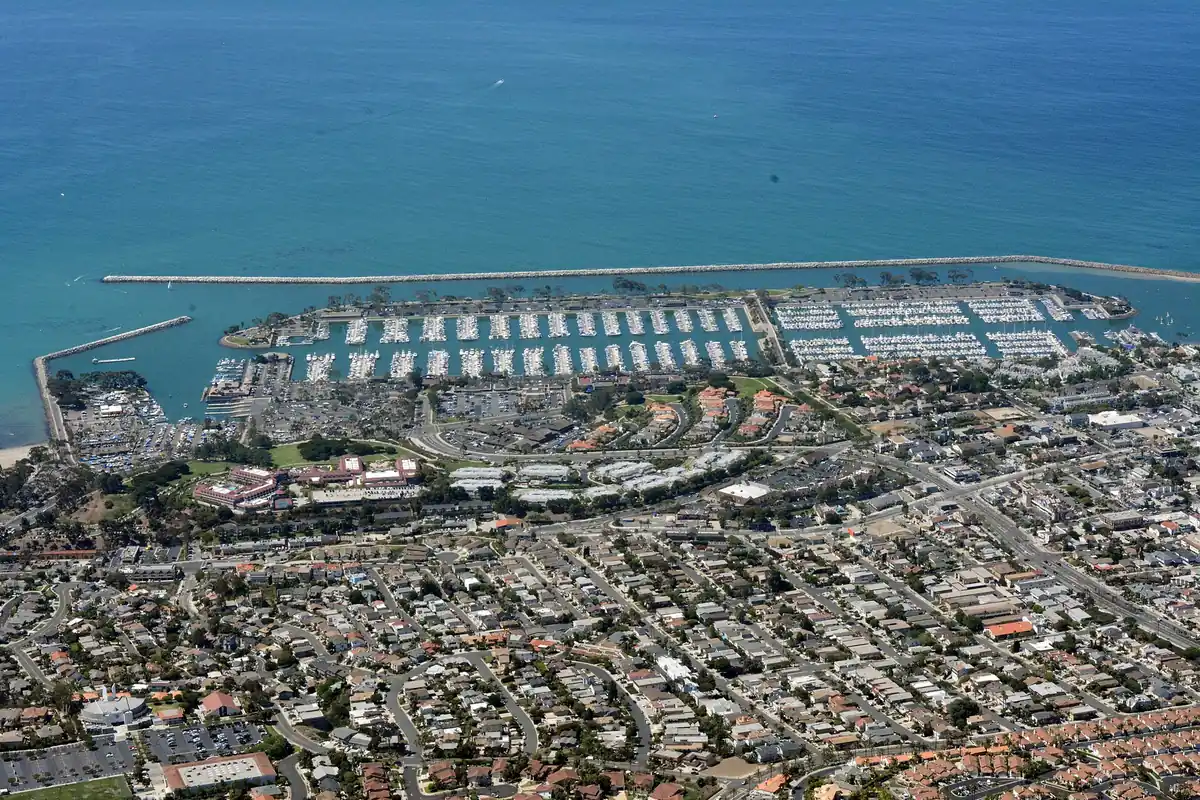
Dana Point, briefly and accurately
Dana Point sits immediately north of San Clemente on the South Orange County coast and had a population of 33,107 at the 2020 census. It incorporated on 1 January 1989 and is named after the headland, which in turn is named after Richard Henry Dana Jr. The city covers 6.75 square miles, of which 6.49 is land, at an elevation of 144 feet, and carries ZIP codes 92624 and 92629.
Two facts about it matter for cabinetry more than anything else. The first is the harbour: Dana Point Harbor was constructed in 1966, and the housing on either side of that date is noticeably different in scale and in kitchen layout. The second is tenure: of 16,254 housing units, 87.7 percent were occupied at the 2020 census, and of those occupied units 58.6 percent were owner-occupied and 41.4 percent renter-occupied. That is the lowest owner share of the four cities in this service area, and it changes which specification decisions carry weight.
The Lantern Village, and why small kitchens reward custom work
The Lantern Village is the dense older residential core of Dana Point, home to about 12,000 residents, and its streets are named after the coloured lanterns ships used two centuries ago to advertise their wares when anchored in the natural harbour: the Street of the Violet Lantern, Blue Lantern and the rest. Much of its housing predates the 1966 harbour, and the kitchens in it are small.
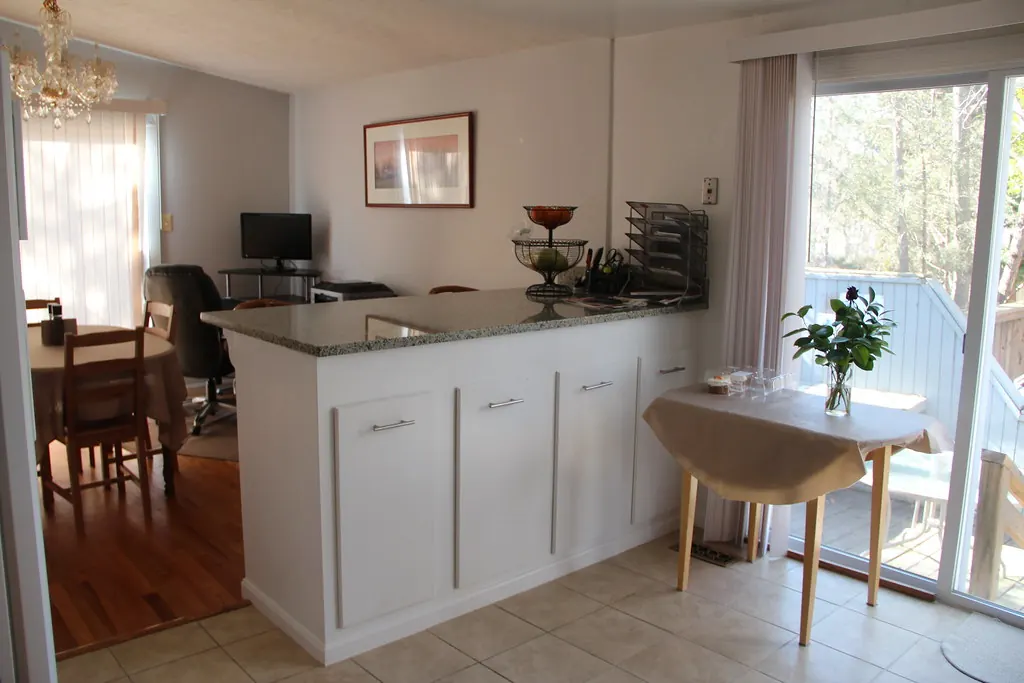
Small kitchens are exactly where catalogue cabinet sizes hurt most. A four inch filler strip in a thirty-foot kitchen is an irritation; in a nine-foot galley it is an appreciable share of your storage. A dead corner in a large kitchen is a nuisance; in a small one it is the difference between having somewhere to put the large pans and not. The arithmetic of custom cabinetry improves as the room gets smaller, which is the opposite of most people’s assumption.
The practical interventions that pay for themselves in a Lantern Village kitchen are the ones covered on the kitchen cabinets page: drawers instead of doors in the base run, cabinets that reach the ceiling rather than stopping short, and a proper corner solution rather than a blind cabinet. All three recover storage that a small kitchen cannot afford to waste.
The rental share, and what it changes
With 41.4 percent of occupied units renter-occupied, Dana Point has the highest rental share of the four cities here, against 24.2 percent in San Juan Capistrano, 32.9 percent in Laguna Niguel and 36.0 percent in San Clemente. That is worth naming because cabinet specification for a rental is a genuinely different optimisation from specification for a house somebody lives in.
The published figures make the point. Fannie Mae’s Estimated Useful Life Tables, Form 4099.F of August 2019, list “Kitchen: Cabinets (wood construction)” at 20 years for multifamily property and “Kitchen: Cabinets (particle board)” at 15, and list a bathroom vanity at 10. Those are capital-planning numbers for buildings somebody is budgeting to maintain, and they are considerably shorter than the 50 years the NAHB and Bank of America Home Equity study gives for kitchen cabinets from a manufacturer survey.
Coastal hardware, which matters more here than a mile inland
Dana Point is a harbour city with 6.49 square miles of land almost all of it within reach of the ocean air, and the component that fails first in a coastal kitchen is hardware. Thin decorative plating over steel pits in salt-laden air, then blisters, then lets the steel underneath corrode, and in a hinge or a slide that is mechanical failure rather than a cosmetic one.
Solid brass, stainless steel and properly finished zinc all survive. None of them carries a serious premium, and the difference only becomes visible years later, which is precisely why it gets decided carelessly. Insisting on the hardware specification as a written line in a quote is the single most useful thing anybody can do with a Dana Point kitchen, and the detail is on the hardware page.
| Dana Point | San Clemente | |
|---|---|---|
| Population | 33,107 | 64,293 |
| Housing units | 16,254 | 26,647 |
| Owner-occupied share of occupied units | 58.6% | 64.0% |
| Median age | 49.8 | 43.9 |
| Median household income, 2023 estimate | $127,246 | $134,735 |
| Incorporated | 1 January 1989 | 27 February 1928 |
Both figures for median household income are US Census Bureau estimates for 2023. The rest are 2020 decennial census figures.
Housing age, and the rule that follows from it
Dana Point incorporated on 1 January 1989, but the city is far older than its incorporation date: the Lantern Village substantially predates the 1966 construction of Dana Point Harbor, and Capistrano Beach carries a run of houses from the late 1920s. That means a large share of the housing stock predates 1978, which brings a federal rule into most cabinet jobs here.
The Renovation, Repair and Painting Rule applies to “houses, apartments and child-occupied facilities (such as schools and child care centers) built before 1978” and requires that “Anyone who is paid to perform work that disturbs paint in housing and child-occupied facilities built before 1978 must be certified. This includes all firms, even sole proprietorships.” In California the EPA administers it directly rather than through a state programme. Covered activities include remodeling, carpentry, plumbing, electrical work and painting preparation.
The exemption covers “Minor repair and maintenance activities that disturb six square feet or less of paint per room inside, or 20 square feet or less on the exterior,” with window replacement and demolition of painted surfaces covered regardless of area. Removing an old kitchen in a Lantern Village cottage is demolition of painted surfaces. Ask any firm you speak to whether they hold RRP firm certification, and expect a straight answer.
Dana Point’s housing stock, in the City’s own Housing Element data
Nearly 61 percent of Dana Point’s housing was built between 1970 and 1989, and 12.7 percent of the city’s units are vacant with more than two thirds of those held as seasonal housing. Both figures come from the SCAG Pre-Certified Local Housing Data prepared for the City’s 6th Cycle Housing Element Update, updated April 2021, which is the dataset the City itself used to write its Housing Element. It is worth reading carefully, because between them those two numbers describe most of the cabinet work in this city.
| Measure | Dana Point | Comparison |
|---|---|---|
| Total housing units | 16,172 | San Clemente 26,573 |
| Single-family detached units | 8,801 | 54.4 percent of all units |
| All single-family share | 67.2 percent | SCAG region 61.7 percent |
| Single-family attached | 12.8 percent | SCAG region 7.2 percent |
| Multifamily, 2 to 4 units | 16.5 percent | SCAG region 7.5 percent |
| Multifamily, 5 or more units | 14.7 percent | SCAG region 27.3 percent |
| Mobile homes | 1.5 percent | SCAG region 3.5 percent |
| Occupied units | 14,113 | Total vacancy rate 12.7 percent |
| Average household size | 2.332 people | San Clemente 2.642 |
| 2018 median home sales price, existing homes | $940,000 | Up 161 percent since 2000 |
Figures from the SCAG Pre-Certified Local Housing Data, updated April 2021, prepared for the City of Dana Point's 6th Cycle Housing Element Update, drawing on California Department of Finance E-5 estimates and American Community Survey 2014-2018 five year estimates. Median sales price from SCAG Local Profiles and Core Logic / Data Quick.
The housing type split is the part that most affects how cabinetry is specified here. Dana Point has 16.5 percent of its units in buildings of two to four units, against 7.5 percent across the SCAG region, and 12.8 percent single-family attached against 7.2 percent regionally. That is a duplex, triplex and townhouse city to a degree the rest of South Orange County is not, and small attached units mean small kitchens, shared walls that cannot be opened up, and stair access that decides the maximum carcass size that can physically reach the room. All three push toward drawn cabinetry rather than a stock package, which is the argument this page makes about the Lantern Village made in numbers instead of impressions.
The age distribution, and the pre-1978 line running through it
| Year built | Share of units | Cabinet consequence |
|---|---|---|
| 1939 and earlier | 0.8 percent | Capistrano Beach cottage stock. Nothing is square, everything is measured |
| 1940 to 1949 | 1.0 percent | Same, and firmly inside the federal lead rule |
| 1950 to 1959 | 7.0 percent | Original casework usually long gone; second or third kitchen in place |
| 1960 to 1969 | 16.6 percent | Pre-harbour Lantern Village. Small footprints, face frame boxes |
| 1970 to 1979 | 32.1 percent | The largest band by a wide margin. Straddles the 1978 lead line |
| 1980 to 1989 | 28.7 percent | Built before incorporation. Sound boxes, dated fronts: refacing territory |
| 1990 to 1999 | 8.4 percent | Full overlay, reusable hinge boring |
| 2000 to 2009 | 4.9 percent | Only a twentieth of the city. Dana Point is not a new-build market |
| 2010 to 2013 | 0.1 percent | Effectively nothing |
| 2014 and later | 0.2 percent | Effectively nothing |
Shares from the SCAG dataset above, citing American Community Survey 2014-2018 five year estimates. The SCAG region comparison for 1970-1979 is 16.3 percent, so Dana Point's concentration in that decade is roughly double the regional figure.
Add the bands and 58.5 percent of Dana Point’s housing predates 1980, which is the number that makes the federal lead rule a routine part of quoting here rather than an occasional complication. The 1970s band alone is 32.1 percent against 16.3 percent regionally, so Dana Point is roughly twice as concentrated in that decade as Southern California as a whole. Meanwhile only 5.2 percent of the stock was built in 2000 or later. There is almost no new-build cabinet market in this city, which is precisely why the work divides so cleanly into small older kitchens that need drawing and late-1980s boxes that need refacing.
The vacancy figure, and why it is a specification issue
Dana Point’s 12.7 percent vacancy rate is not a soft market, it is second homes, and the SCAG breakdown of vacant units by category says so: 69.6 percent seasonal, against 33.5 percent seasonal across the SCAG region, with 11.8 percent for rent, 6.1 percent rented but not yet occupied, 2.8 percent for sale, 4.0 percent sold but not yet occupied and 5.7 percent other. Roughly 1,430 units in this city are seasonal housing.
A house standing closed for months at a time is a different specification problem from an occupied one, and in a coastal city the difference is corrosion. With the air conditioning off and the windows shut, interior humidity tracks outdoor humidity, and a garage or a laundry in a closed-up beach house sits in damp salt air for the whole off season with nobody opening a door. The three decisions that matter are the hardware specification, which is covered in detail further down this page, keeping carcasses off slabs, and avoiding decorative plating anywhere a hinge or slide has to keep working. None of that costs more at build time. All of it is impossible to retrofit.
Permits: Dana Point is its own jurisdiction
This is the point most worth making on a page written by a San Clemente business. San Clemente publishes an unusually detailed set of permit material, including its own amended exempt-work ordinance and a homeowner handout naming which appliances trigger which permit. None of that applies in Dana Point. Dana Point is a separate city with its own building department and its own process, and Capistrano Beach sits inside it.
What holds across California regardless of jurisdiction is the general shape: cabinets are finish work, and the plumbing, electrical and mechanical work attached to a kitchen is separate and permitted on its own terms. What differs city to city is the detail, the fee structure and the application route. Confirm the specifics with the City of Dana Point rather than assuming a neighbouring city’s published position transfers.
The state-level rules do transfer, and they are the ones that protect you: a written, signed contract before work starts on anything over $500 under Business and Professions Code 7159; a deposit capped at $1,000 or ten percent of the contract whichever is less under 7159.5; a three business day right to cancel, five for a senior citizen, except where the contract was negotiated at the contractor’s place of business; and a CSLB licence, classification C-6 for cabinet, millwork and finish carpentry.
Specification for a rental, in published numbers
With 41.4 percent of occupied units renter-occupied, Dana Point has the highest rental share in this service area, and cabinet specification for a rental is a genuinely different optimisation. The published figures make the case better than an opinion would.
| Component | Figure | Source |
|---|---|---|
| Kitchen cabinets, wood construction | 20 years | Fannie Mae Estimated Useful Life Tables, multifamily |
| Kitchen cabinets, particle board | 15 years | Fannie Mae Estimated Useful Life Tables, multifamily |
| Kitchen cabinets, student housing | 15 years wood, 13 particle board | Fannie Mae, student column |
| Bathroom vanity | 10 years | Fannie Mae, multifamily |
| Kitchen cabinets, owner context | 50 years | NAHB and Bank of America Home Equity, 2007 |
| Kitchen cabinets, wood construction | 15 to 25 years | Georgia DCA Office of Affordable Housing, 2011 |
All reproduced in Appendix C of the Port of Seattle SEA-SIPP Technical Report. The Fannie Mae tables state they "are intended to represent standardized average estimated useful life values and are not intended to replace the professional judgment of the PCA Consultant."
Two things follow. The five year gap between wood construction and particle board is the clearest published argument for a plywood sink base, and it is worth more in a rental than anywhere, because a landlord replaces what fails rather than living with it. And the ten year figure for a bathroom vanity against twenty for kitchen cabinets says that vanities are the shorter-lived component, so the specification effort belongs there rather than on a more elaborate kitchen door.
What we do in Dana Point
All seventeen services on the services hub are available here. The three that come up most often in Dana Point specifically are custom cabinetry in the small Lantern Village kitchens where catalogue sizes waste the most space, refacing on the later hillside and Monarch Beach housing where the boxes are sound and the profile has dated, and installation on cabinets already bought, which is common in a rental market where a landlord has ordered a package and needs somebody to fit it.
- In the Lantern Village, measure every filler strip before assuming a catalogue kitchen will do
- Anywhere near the harbour or on the ocean side, specify the hardware finish explicitly
- For a rental, put the money into the box and the slides rather than the door profile
- In a condominium, check the association rules on hours, access and waste before scheduling
- Confirm permit requirements with the City of Dana Point, which has its own building department
- In a small kitchen, price a corner solution and full-height cabinets before anything decorative
Capistrano Beach and the rest of the area
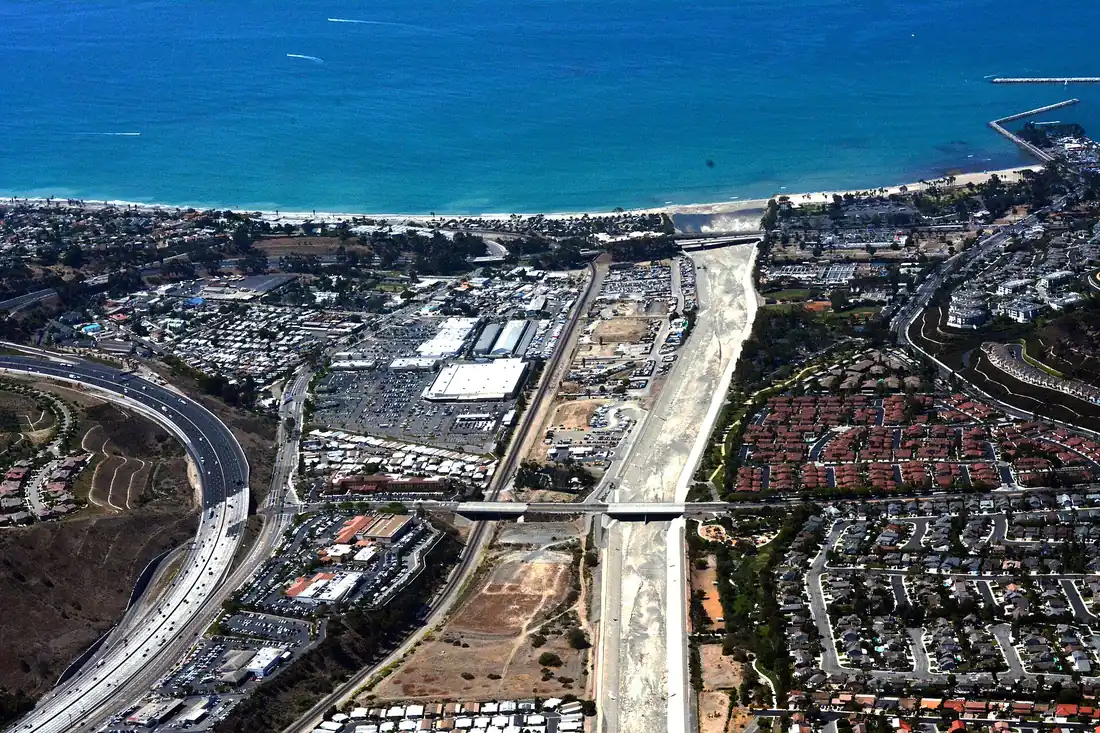
Capistrano Beach is part of Dana Point and has enough of its own character to justify separate treatment, principally because of the run of Spanish style houses built there in the late 1920s whose contractor favoured large exposed ceiling beams in the main rooms. That is a real constraint on cabinet height and on where crown can terminate, and it is covered on the Capistrano Beach page.
Inland and north, the service area continues through San Juan Capistrano and Laguna Niguel, and south into San Clemente itself including Talega. The whole coverage is on the service area page.