What a linear foot is
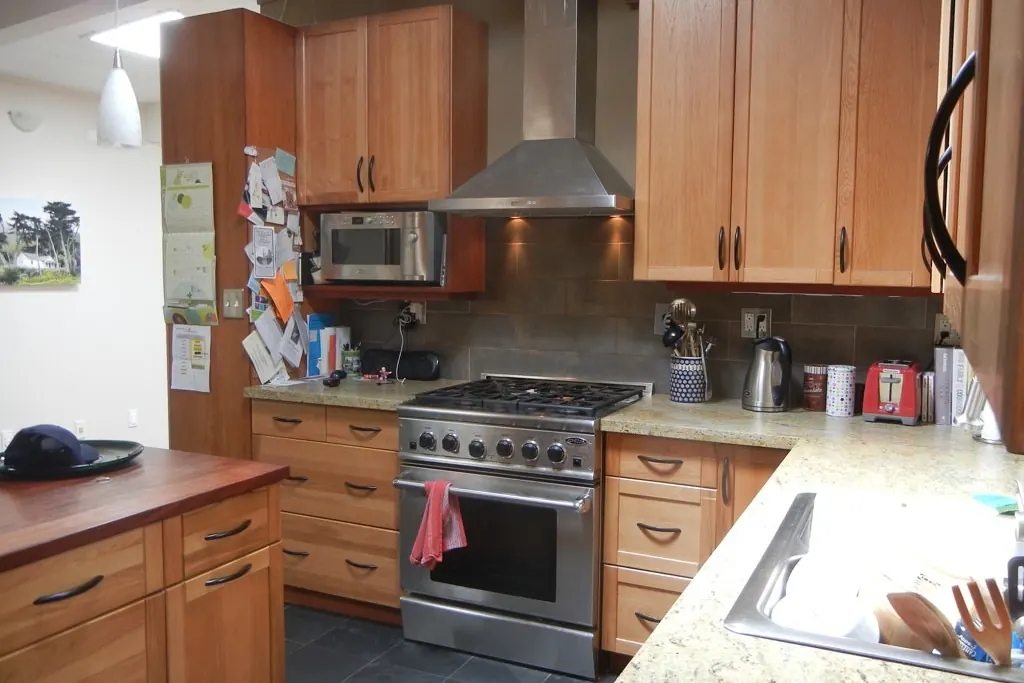
A linear foot is one foot measured horizontally along the wall that a cabinet run occupies. It is not a square foot, it is not a cabinet, and it is not a foot of countertop. Under the convention nearly every cabinet shop uses, a linear foot includes the base cabinet and the wall cabinet above it together, as one foot rather than two.
That single sentence resolves most of the confusion around cabinet pricing. It is why a kitchen that feels like it has “a lot of cabinets” usually measures somewhere between 16 and 30 linear feet, and why a published figure of $600 per linear foot produces a number in the low five figures rather than the six figures people sometimes brace for.
The unit exists because it correlates reasonably well with the work in a typical kitchen. A foot of wall with a base cabinet and an upper is a fairly consistent quantity of carcass, door, hinge, fixing and finish. It stops correlating as soon as the kitchen stops being typical, which is the subject of section four.
The three conventions that make quotes incomparable
None of these is dishonest. They are genuinely different ways of counting, and a shop that has used one for twenty years is not going to think to mention it.
| Convention | Variant A | Variant B | Effect |
|---|---|---|---|
| Base and wall | Counted as one foot together | Counted as two separate feet | Roughly halves or doubles the foot count |
| Tall units | Counted at actual width | Counted at a premium or double | Adds several feet in a kitchen with two tall units |
| Islands | Inside the kitchen total | Priced as a separate item | Moves 6 to 10 feet between the two numbers |
Ask all three questions of every quote. A shop quoting 22 feet at $900 and a shop quoting 40 feet at $500 may be offering the same kitchen for within a few hundred dollars of each other.
The published bands
| Tier | Installed per linear foot | Source geography |
|---|---|---|
| Stock | $75 to $400+ | National, updated July 2026 |
| Semi-custom | $150 to $900+ | National, updated July 2026 |
| Custom | $500 to $1,400+ | National, updated July 2026 |
| Custom | $500 to $1,200 | California, one cabinet maker's published guide |
| Budget | $75 to $150 | Los Angeles, one cabinet maker's 2026 guide |
| Semi-custom | $150 to $650 | Los Angeles, one cabinet maker's 2026 guide |
| Premium | $300 to $800 | Los Angeles, one cabinet maker's 2026 guide |
| Luxury custom | $500 to $1,500+ | Los Angeles, one cabinet maker's 2026 guide |
Notice the overlap. A high stock kitchen and a low semi-custom kitchen occupy the same $150 to $400 band, and a high semi-custom kitchen and a low custom kitchen both sit around $500 to $900. Tier names describe how the cabinets are made, not what they cost.
That overlap is worth dwelling on, because it means a tier label is not a price bracket. A well-specified semi-custom kitchen at the top of its band costs more than a poorly specified custom kitchen at the bottom of its. What decides which you should buy is the dimensions question, not the budget.
National installed per-linear-foot figures→ and the Los Angeles 2026 tiers→
Where per linear foot stops working
The unit is an average, and averages fail on unusual kitchens in both directions.
It under-prices drawer-heavy kitchens
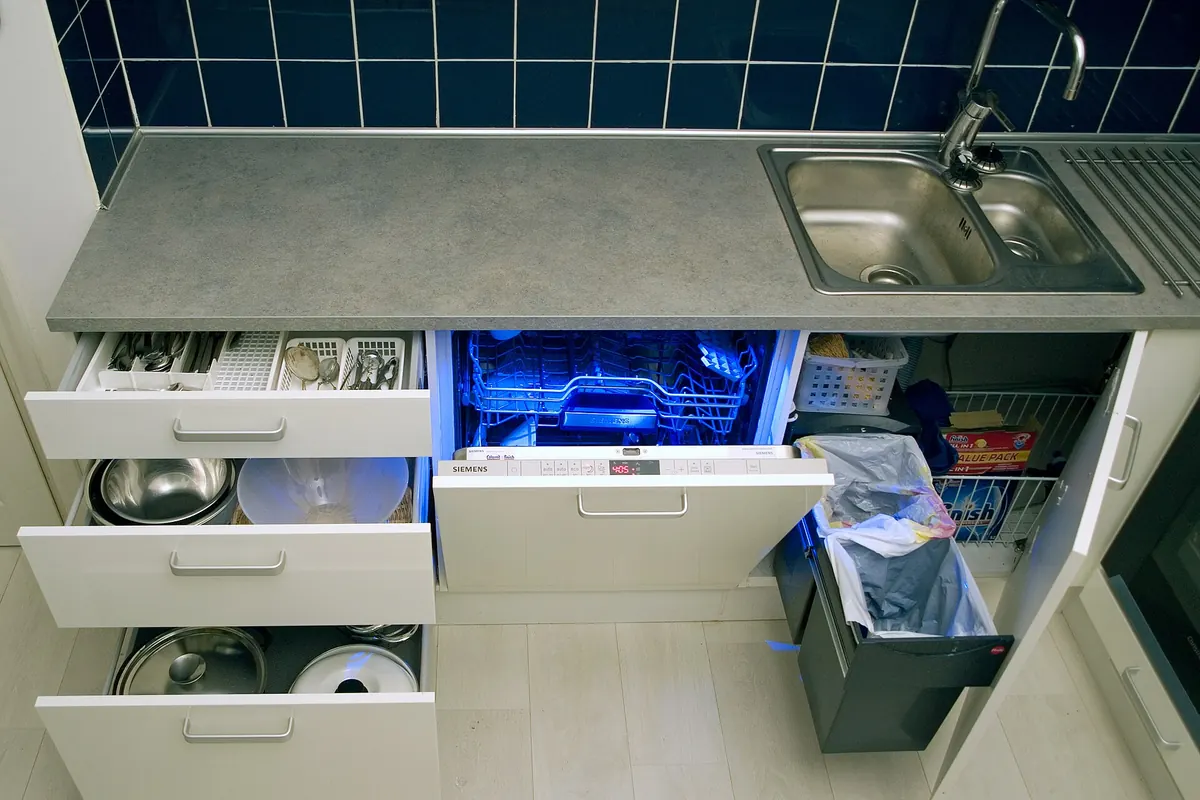
A drawer is five joined parts plus a pair of slides and a front. A door is one part and two hinges. A base run converted entirely to drawers can carry two or three times the joinery of the same run in doors, and both are the same number of linear feet. This is why a quote that states a rate but not a drawer count is not yet a quote.
It over-prices plain runs
The opposite is also true. A long run of simple base cabinets with slab doors and no finished ends contains less work per foot than the average the rate was built on. A shop that prices strictly by the foot is charging you the average on a below-average job.
It says nothing about tall units and specials
A pantry tall unit is roughly the material of a base plus a wall plus a mid-section, in one carcass. An appliance surround with a filler each side and a bridging cabinet over it is three components pretending to be one foot. Both are legitimately priced outside the per-foot rate by some shops and inside it by others.
Worked arithmetic on real kitchen sizes
Measure your own run, pick a rate from the published bands, multiply. Then add the items that sit outside the rate.
| Run | At $200/ft | At $500/ft | At $900/ft | At $1,200/ft |
|---|---|---|---|---|
| 16 ft | $3,200 | $8,000 | $14,400 | $19,200 |
| 20 ft | $4,000 | $10,000 | $18,000 | $24,000 |
| 24 ft | $4,800 | $12,000 | $21,600 | $28,800 |
| 30 ft | $6,000 | $15,000 | $27,000 | $36,000 |
| 38 ft | $7,600 | $19,000 | $34,200 | $45,600 |
The $200 column sits in the semi-custom band, $500 to $900 spans the top of semi-custom and the bottom of custom, and $1,200 is upper custom. Nothing here includes countertops, appliances or services.
Then add the items outside the rate
| Item | Published figure | On a 24 ft kitchen |
|---|---|---|
| Installation labour | $50 to $70 per linear foot | $1,200 to $1,680 |
| Removing old cabinets | About $300 | $300 |
| Finished ends | $100 to $200 each | $800 to $1,600 for eight |
| Crown moulding | About $70 per 8 ft section | About $140 for sixteen feet |
| Hardware | $2 to $50 a piece | $64 to $1,600 for thirty-two pieces |
| Total outside the rate | About $2,500 to $5,300 |
Installation, removal, finished ends and crown are national figures updated July 2026. The hardware spread is from a San Clemente cost source and is unusually wide because it depends entirely on what you pick.
The practical takeaway is that a 24 foot kitchen at $600 a foot is about $14,400 of cabinetry and roughly $17,000 to $20,000 by the time it is on the wall with handles on it. Neither number is wrong. They are answers to different questions, and a great deal of frustration in this trade comes from one party answering the first while the other asks the second.
San Clemente has its own published per-foot figure, and it is installation only
A San Clemente cost source publishes $150 to $380 per linear foot of cabinets installed, and that figure is labour for installation alone, not cabinetry. The same page publishes $150 to $500 per cabinet to assemble and install, and a typical whole-project range of $1,432 to $13,132 for a San Clemente cabinet installation. Read those three numbers together and the reason the local per-foot figure looks so high next to the national $50 to $70 installation rate becomes clear: the local figure is a modeled build-up of labour hours at local rates for a delivered and fitted job, and the national one is a bare hang-the-box rate.
| Basis | Published figure | On 24 ft / 12 cabinets |
|---|---|---|
| National installation labour, per linear foot | $50 to $70 | $1,200 to $1,680 |
| San Clemente installation, per linear foot | $150 to $380 | $3,600 to $9,120 |
| San Clemente installation, per cabinet | $150 to $500 | $1,800 to $6,000 |
| San Clemente whole-project range | $1,432 to $13,132 | Inside the range at either end |
Three bases, one job, and a spread of more than $7,000 between the cheapest and dearest reading. This is why asking what is inside the rate matters more than comparing rates.
The practical lesson is not that one source is right. It is that per-foot figures are only comparable when they cover the same scope, and the word installation carries three different scopes across those three published figures. Before you compare two quotes on a rate, establish whether each rate covers cabinetry alone, cabinetry plus fitting, or fitting alone.
What the per-foot total means for your deposit
California caps the down payment on a home improvement contract at $1,000 or ten percent of the contract price, whichever is less, under Business and Professions Code section 7159.5. Because the cap is a whichever-is-less rule, it stops scaling at a $10,000 contract, and almost every custom cabinetry job in this city is above that. So the deposit on a $14,400 kitchen and the deposit on a $45,600 kitchen are the same $1,000.
| Cabinetry total | Ten percent | Lawful maximum deposit |
|---|---|---|
| $4,800 | $480 | $480, because ten percent is the lesser figure |
| $9,600 | $960 | $960, because ten percent is the lesser figure |
| $10,000 | $1,000 | $1,000, the crossover point |
| $14,400 | $1,440 | $1,000 |
| $27,000 | $2,700 | $1,000 |
| $45,600 | $4,560 | $1,000 |
Arithmetic applied to the run-length table above. The statute also requires that payments after the deposit not run ahead of the work performed and materials delivered.
This matters when you are reading a per-foot quote because a large foot count produces a large total, and a large total does not entitle anybody to a large deposit. A shop that quotes you $900 a foot on a thirty foot kitchen and then asks for a third of $27,000 up front is asking for roughly nine times the lawful maximum.
The same statute also governs what happens after the deposit. Progress payments may not run ahead of the work performed and the materials delivered, which is the rule that keeps a foot-priced contract honest across a long build: your money moves as cabinetry appears, not as calendar weeks pass. If a shop wants the bulk of a per-foot total before anything has been cut, the size of the foot count is not the justification, because the cap and the progress-payment rule are indifferent to how big the job is.
How to use the unit properly
- Measure your own run before you speak to anybody, so you can sanity-check the foot count in each quote
- Ask every shop whether base and wall count as one foot or two
- Ask whether tall units and the island are inside the total or priced separately
- Ask whether installation is inside the rate, since it is $50 to $70 a foot on its own
- Get the drawer count stated, because it is the largest source of work variation at a fixed foot count
- Get finished ends, crown, removal and hardware listed separately rather than absorbed
- Compare totals, not rates, once all of the above are on the same basis
The San Clemente-specific figures, including published local refacing and painting ranges, are in the cost guide. The reason tiers exist at all, and which one your kitchen actually needs, is in the tier comparison. And what you get for the money is on the custom cabinets page.